JournalHow to Store Green Coffee Beans: A Freshness Guide
October 25, 2026
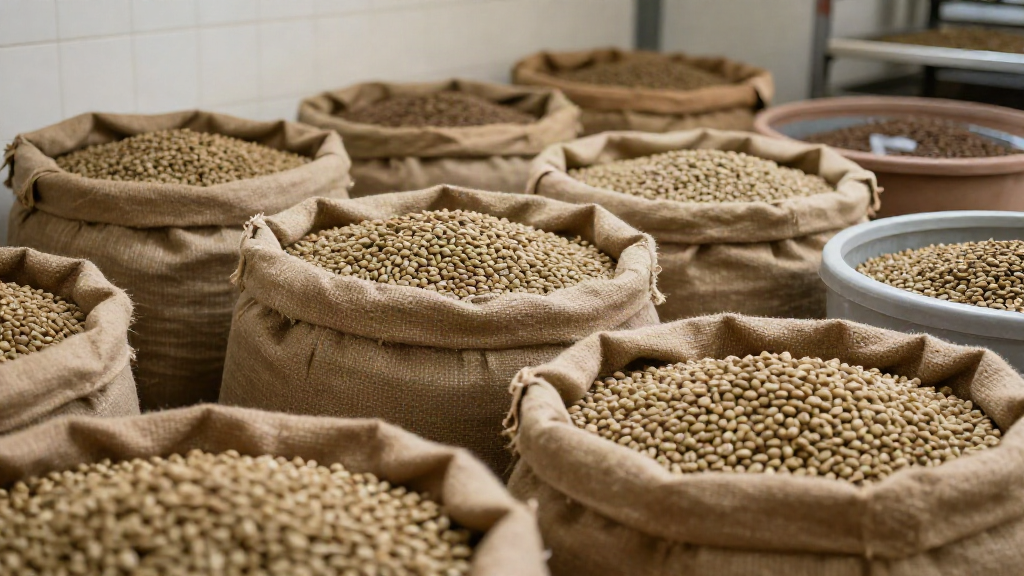
How to Store Green Coffee Beans: Keeping Lots Fresh From Delivery to Roast It is easy to treat green coffee as a finished product the moment it lands on your dock. It is not. Green coffee is a living agricultural product, and every week it sits in the wrong conditions it loses something you paid for: moisture, aroma precursors, and the consistency you promised your customers. If you are new to roasting or buying green coffee, this is the beginner's version of a problem professionals solve every day. Get storage right early and almost everything downstream, from roast profiling to cupping scores, gets easier. ## What Actually Happens to Green Coffee as It Ages Green coffee ages on a curve, not a cliff. The changes are slow, cumulative, and mostly invisible until they show up in the roaster. Four forces drive that curve. ### Moisture Green coffee ships with a target moisture range, usually somewhere around 10 to 12 percent. That number is not trivia, it is the baseline your roast plan is built on. In dry air, beans shed moisture and roast faster and flatter. In humid air, they absorb it and behave unpredictably, with more risk of uneven development and mold. ### Temperature Heat accelerates everything. Every degree above a cool, stable room pushes the aging process forward, and swings between hot days and cold nights are almost worse than steady warmth because the bean never settles. ### Light Ultraviolet light degrades the oils and compounds you are trying to protect. Beans in clear containers under bright windows fade faster than the same lot kept dark, and the damage does not announce itself until you taste it. ### Odor Transfer Green coffee is porous and absorptive. Coffee stored near fuel, cleaning chemicals, smoked fish, or a bag of onions will take on those aromas. This is the failure mode beginners notice first, because it turns up as an obvious off-flavor in the cup. ## Setting Up Storage That Works Storage is less about buying one perfect container and more about controlling the room the coffee lives in. ### Keep the liner, and close it properly Most green coffee arrives in burlap or woven bags with an inner liner, often GrainPro or a similar barrier material. That liner is the actual protection, not the outer sack. Keep lots inside it, fold or tie it closed after every opening, and reseal fully rather than leaving the top rolled open in the corner. ### Bins and containers do not have to be complicated For lots you pull from daily, a clean, food-grade bin with a sealing lid is plenty. Choose opaque over clear so light stays out. A simple rule: the container's job is to block air exchange, moisture, light, and odor, and to let you label the lot clearly. ### Set climate targets you can actually hold Air conditioning is not required, but consistency is. Aim for a cool, dry, dark space with stable temperature and low humidity. A closet, an interior room, or a dedicated green storage area works far better than a loading dock, a glass-fronted office, or a garage that bakes in summer. If your space swings, insulate the storage area before you buy more equipment. ### Rotate by lot, not by convenience The oldest coffee should always ship or roast first. Write the arrival date and lot number on every bag, and store new deliveries behind older ones so the rotation happens by default rather than by memory. In a real storage system, first in, first out is not a slogan, it is the whole point of labeling. ## How to Spot Freshness Problems Early Freshness problems rarely show up as a single dramatic failure. They show up as small drifts. Watch for these signs: - Beans that feel unusually dry, brittle, or dusty, which usually points to moisture loss - A dull, flat, or papery smell when you open the bag, a sign of fading aromatics - Visible mold, clumping, or a musty, damp odor, which means the lot was stored too wet and should be quarantined immediately - Condensation inside a sealed liner after a temperature swing - Roasts that suddenly run lighter, faster, or less evenly than the same lot did two weeks ago If you notice any of these, check the storage environment first before blaming your roast profile or your equipment. Most drift starts in the room, not the drum. ## What to Do When You Find a Problem Act quickly and honestly. Isolate the affected lot so it does not contaminate or distract from healthy coffee. Move it to a better-controlled space if the environment caused the issue. Then adjust your roast schedule: roast that lot sooner, in smaller batches, or with slightly more development to compensate for the moisture it has lost. If a lot is already tasting flat, it is better to use it in blends or everyday offerings and keep it out of your flagship single-origin lineup. Freshness is a purchasing decision as much as a storage one, and the fix sometimes belongs on the buy side. ## A Simple Beginner Routine You do not need a sophisticated system to store green coffee well. You need four habits: - Store every lot in its liner or an opaque sealed bin - Keep the room cool, dry, dark, and odor-free - Label every bag with a lot number and arrival date - Rotate oldest first and spot-check the coffee monthly If you can do those four things consistently, you will keep most lots in good condition for months rather than weeks. ## Storing Well Is Part of Sourcing Well Storage is the last mile of sourcing, and it is where a lot either delivers on its promise or quietly loses it. Buy coffee you are excited about, then protect it with the same care you put into choosing it. That is how quality survives from the delivery dock to the roaster, and how you keep the cup tasting like the samples that convinced you to buy in the first place.