
How to Buy Green Coffee Beans Wholesale Without Chasing a Dozen Supplier Sites
September 26, 2026
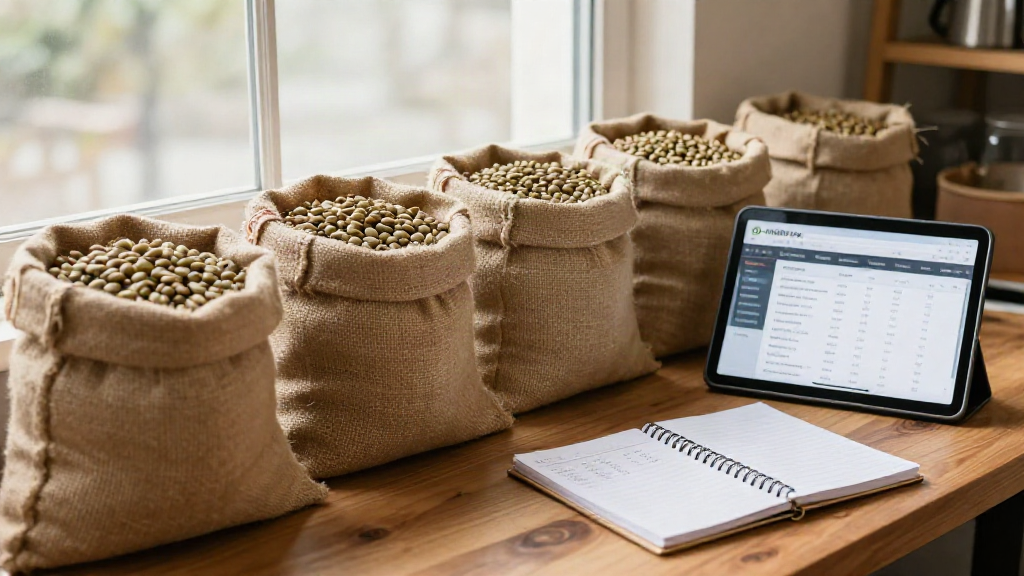
Buying green coffee at wholesale shouldn't require forty browser tabs, three spreadsheets, and a string of emails to suppliers who may or may not still have the lot you saw last week. Yet that's the default workflow for most roasters and green buyers. You know the coffee you want. The problem is finding it, comparing it, and locking it down before someone else does.
This guide walks through a modern wholesale sourcing workflow, step by step, and shows where a connected marketplace fits at each stage.
Why wholesale green coffee sourcing breaks down
The traditional path is a scavenger hunt. You keep a mental list of importers, exporters, brokers, and producers. You check their lists, their PDFs, their emailed availability sheets. You convert pounds to kilos, guess at screen sizes, and hope the price you were quoted is still the price today.
The friction compounds in three places:
- Discovery. Your inventory of "what's available" is only as good as the last site you checked.
- Comparison. Lots are described inconsistently across suppliers, so comparing a washed Ethiopian from one importer against a similar lot from another is guesswork.
- Follow-through. Samples, terms, contracts, and shipping live in different inboxes, so nothing is tracked in one place.
None of that is a coffee problem. It's a workflow problem.
Step 1: Define your quality spec before you shop
Start with a spec, not a search. Write down what the lot needs to deliver:
- Origin and process - washed, natural, honey, anaerobic, whatever the profile demands.
- Cup profile - the flavor notes and structure your menu or blend needs.
- Score or grade floor - the minimum you'll accept for a single-origin or your house blend.
- Volume - full bags vs. split bags, and how many you need per cycle.
- Price ceiling - landed cost per pound or kilo, not just FOB.
A spec turns browsing into filtering. You stop evaluating every lot that crosses your feed and start qualifying the ones that match.
Step 2: Compare availability, price, and lot details side by side
Once you have the spec, the job is comparison. This is where scattered supplier sites cost you the most time, because every listing presents information differently.
On a coffee marketplace for roasters, live inventory is the point. Instead of browsing static catalogs, you're searching current listings posted by importers, producers, exporters, and other sellers - green and roasted - with price, origin, process, and lot details in a consistent format. That consistency is what makes comparison fast, and fast comparison is what gets you a better price.
Filter to your spec, sort by what matters to you, and shortlist the lots worth a closer look.
Step 3: Request samples and cup with a scorecard
Never commit to a wholesale lot without cupping it. Samples are cheap; a bad contract isn't.
Keep a simple scorecard so decisions are comparable across origins and suppliers: aroma, acidity, body, sweetness, flavor clarity, aftertaste, and defects. Score blind where you can. Two lots that read the same on paper rarely cup the same.
With a marketplace workflow, sample requests happen in the same place as the sourcing conversation - tracked against the lot, the supplier, and your shortlist, rather than buried in a thread you'll never find again.
Step 4: Confirm terms, volume, and logistics
Once a lot cups well, lock the terms. Confirm the details that quietly wreck margins:
- Price and incoterms - FOB, CIF, ex-warehouse, and who pays what.
- Volume and packaging - full bags, GrainPro liners, palletization.
- Availability window - current stock, spot, or forward contract.
- Delivery timeline and origin - port, warehouse, or direct.
- Payment terms - what's standard for the relationship, and what's negotiable.
Because sellers on Hightower keep their own checkout, you buy directly from the party you're dealing with. No layered middlemen, no ambiguity about who you're actually transacting with.
Step 5: Post a sourcing request when the shelf doesn't have it
Sometimes the coffee you need isn't listed yet. In the old workflow, that meant cold-emailing a dozen suppliers and waiting.
A sourcing request flips it. Post what you're looking for - origin, process, profile, volume, target price, timeline - and let sellers who have exactly that bring it to you. You manage matches and conversations from one dashboard instead of chasing replies across inboxes.
For buyers hunting a specific profile or a hard-to-find origin, this is the difference between sourcing and searching.
What changes when sourcing runs on one platform
Pull the steps together and the shift is simple: discovery, comparison, sampling, terms, and conversations live in one workflow instead of across dozens of supplier websites.
- Search live green and roasted inventory in a consistent format instead of decoding a new catalog every time.
- Post sourcing requests and let matched sellers come to you.
- Manage matches and conversations from a single dashboard.
- Buy directly from sellers who keep their own checkout.
If you're a roaster or green buyer, the fastest way to see it is to start looking at real listings instead of reading about them. Head to Hightower, set your spec, and search live inventory - or post a sourcing request and let the right lot find you.
Wholesale green coffee buying doesn't have to be a scavenger hunt. Define the spec, compare live inventory, cup before you commit, confirm the terms, and keep every match and conversation in one place. Do that, and you spend less time chasing suppliers and more time roasting great coffee.