
Green Coffee Marketplace vs. Broker Lists: What Actually Wins for Roasters
September 25, 2026
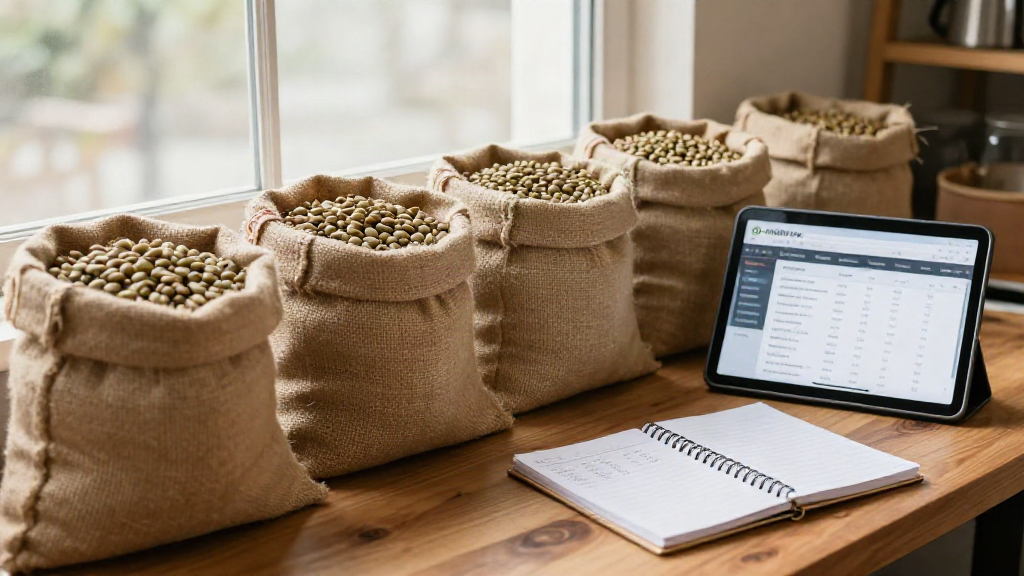
Every roaster has a version of the same Tuesday: six tabs open, three email threads with brokers who haven't answered, a spreadsheet of last year's lots, and a production schedule that doesn't care how any of it goes. Somewhere in there is the coffee you need. The question is how you actually find it - and whether the tool you're using was built for the way sourcing works now.
The two paths most roasters use are broker lists and a green coffee marketplace. Both can put coffee in your roastery. They are not the same instrument.
What a broker list actually gives you
A broker list is a relationship with a person. That person knows producers, has opinions about harvests, and can tell you when something interesting lands. When it works, it's excellent: curated, opinionated, and filtered by someone who has cupped the coffee.
But a broker list is also a one-way document. It's a snapshot of what one intermediary has on hand right now, formatted however they format it, refreshed whenever they get to it. You see their book, not the market. If the lot you want sold last week, you find out when you ask. If a producer ten hours away has exactly the profile you're chasing at a better price, you may never hear about it, because it isn't in that broker's book.
That's not a knock on brokers. It's a description of the format. A list can only ever show you what one source knows.
Where scattered supplier lists break down
The next step up is a shelf of supplier relationships: importer portals, producer direct deals, group chats, PDFs, and a dozen "new arrivals" pages you check manually.
This widens your access, and it also multiplies the work. Availability lives in a dozen places and none of them agree. Pricing is quoted in different units, different Incoterms, sometimes different currencies. You keep a personal spreadsheet as the only place where all of it becomes comparable. Sample requests go out over email and get tracked in your head.
The hidden cost isn't the searching. It's the reconciliation. By the time you've normalized five supplier formats into something you can compare, you've spent hours that were supposed to go into roasting and selling.
What a coffee marketplace for roasters does differently
A green coffee marketplace collapses the scattered part into one searchable place. Instead of checking each supplier's site, you search live green and roasted inventory across many sellers at once, filter by what matters to you, and see what's actually available today.
The useful shift isn't just volume of listings. It's that the marketplace carries the structured fields a spreadsheet would: origin, process, variety, grade, lot size, availability. That structure is what makes listings comparable without you doing the normalizing by hand. Availability is reported by the seller, not by your memory of an email.
For buyers, the workflow runs in one place:
- Search live inventory across suppliers instead of opening each site
- Post a sourcing request when exactly what you need isn't listed, so sellers can bring it to you
- Manage matches and conversations from one dashboard rather than across inboxes
- Track what you're considering so the decision doesn't live in your head
For producers, importers, and suppliers, the same system runs in reverse: publish what you sell, get discovered by buyers actively searching, and keep your own checkout. The marketplace handles discovery and matching; you keep the relationship and the sale.
Head to head
| Sourcing question | Broker lists & scattered supplier sites | A coffee marketplace |
|---|---|---|
| How much of the market do you see? | One broker's book, or the handful of sites you check | Live inventory across many sellers |
| How current is availability? | Whenever the list is refreshed | Seller-reported, searchable now |
| How comparable is pricing? | Reformat it yourself | Structured listing fields |
| What if the right lot isn't listed? | Wait for the next list | Post a sourcing request |
| Where do conversations live? | Email and DMs | One dashboard |
| Who keeps the sale? | The intermediary | The seller, with their own checkout |
Where broker lists still earn their place
Being honest about this matters: a marketplace doesn't retire the broker relationship, and it shouldn't. Brokers bring cupping judgment, negotiation, logistics, and someone who will tell you a lot is off before you commit. For complex, relationship-driven buys, that guidance is worth paying for.
The failure mode is using a broker list as your entire market view. Relationships should inform your sourcing, not narrow it. The strongest roasters treat the broker as one high-value channel and the marketplace as the wider field they scan continuously - so they know what's out there before they ask anyone's opinion about it.
How to run both without doubling the work
The practical setup looks like this:
- Search the market first. Before you email anyone, scan live listings so you know the range of what exists, at what specs, at what price.
- Post a request when the search comes up short. A sourcing request tells sellers exactly what you want and lets them respond, instead of you chasing each one.
- Keep the broker for judgment, not discovery. Route real relationship buys through the people who know the coffee. Use the marketplace to find them in the first place.
- Consolidate the conversation. If matches, samples, and threads all live in one place, your spreadsheet stops being the source of truth.
The short version
Broker lists show you what one source knows. Scattered supplier sites show you more, at the cost of your week. A coffee marketplace shows you live inventory across many sellers, makes it comparable, and gives you a way to ask for what isn't listed yet.
For roasters, that difference is measured in time to a sourced lot - and in how much of the market you actually saw before you committed.
The fastest way to find out which side of this comparison you're on is to search it. Open the marketplace, look for the coffee you need right now, and post a request for the one you can't find. You'll know within ten minutes whether your old process was the bottleneck.