
Green Coffee Certifications Explained: What Each One Verifies
October 30, 2026
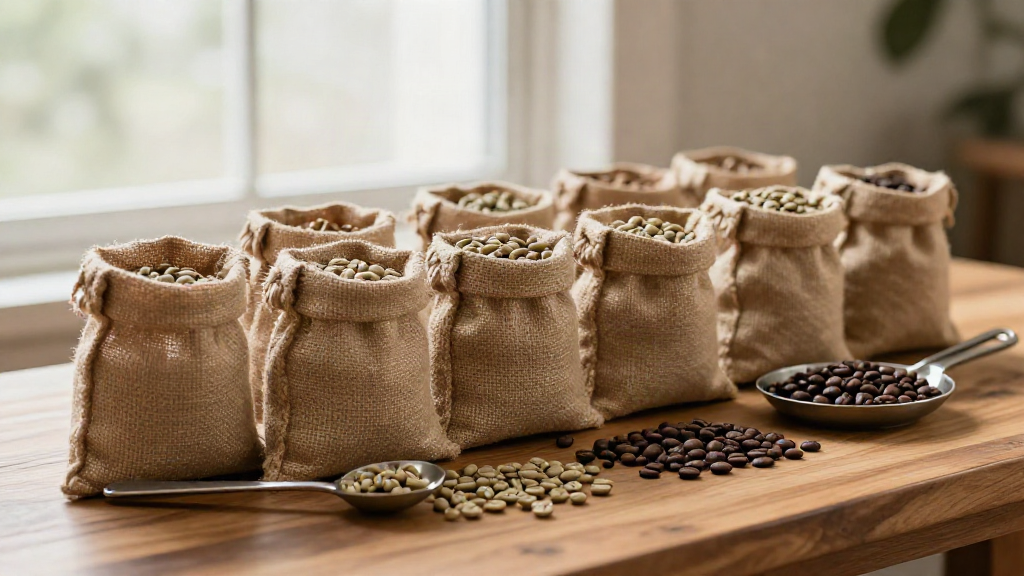
Certification labels show up on green coffee listings the way price tags show up on shelves - they are there to tell you something at a glance. The trouble is that a logo is not an explanation. Two coffees can both carry a seal and mean very different things about how the coffee was grown, who was paid, and what was actually inspected.
Why certification labels exist
Sourcing green coffee means weighing a long list of unknowns: how the crop was farmed, how the people who grew it were treated, how the land was managed, and how the trade was structured. A third-party certification compresses part of that list into a symbol, backed by a standard and an audit. That is genuinely useful. But the symbol only carries meaning if you know which standard it represents and what that standard promises.
The green coffee certifications you will see most
Here is what the labels most common on green coffee listings actually stand for, and the part of the supply chain each one is built to check.
Organic
Organic certification is an agricultural claim. It verifies how the coffee was produced: which inputs were allowed on the farm, and how the coffee was kept separate from non-organic lots through milling, storage, and transport. In the United States this runs through the USDA organic program; in the European Union it runs through EU organic rules. The verification is done by accredited certifiers through farm inspection and record review. Organic says nothing about flavor, cup score, or the price the producer received - only about production methods.
Fairtrade
Fairtrade is a trade-terms and social standard. It sets requirements around the price paid to producer organizations, a premium paid on top of that price, and labor and environmental conditions on the farm. In coffee it generally certifies organized producer groups rather than individual farms. The thing to understand is that Fairtrade verifies the terms of the trade, not the quality in the cup. A Fairtrade lot can be a stellar specialty coffee or an ordinary one; the seal is not a quality grade.
Rainforest Alliance
Rainforest Alliance is an environmental and social standard. Its criteria cover farm management, biodiversity protection, water and soil practices, and worker conditions, and it operates as a certification program with third-party audits. Rainforest Alliance and UTZ merged, so older listings may still show UTZ or a combined mark. This certification speaks to how the farm is run and how the landscape around it is treated - again, not to cup quality or to a specific trade price.
Bird Friendly
Bird Friendly is the most specific of the group, run by the Smithsonian Migratory Bird Center. It requires organic certification as a baseline and adds criteria for shade-grown coffee - canopy structure, shade species, and habitat that supports migratory birds. Because it stacks organic on top of shade requirements, it is one of the narrower labels you will find, and one of the more descriptive about the farming system itself.
Direct trade, which is not one certification
Direct trade is a sourcing practice, not a single audited standard. Some roasters publish their own criteria and their own reporting around producer relationships and prices paid; others use the phrase loosely. When you see direct trade on a listing, the seal is only as strong as the company behind it, so treat it as a claim to check rather than a third-party verification.
What certifications do not verify
This is where buyers get tripped up. A certification rarely tells you how the coffee tastes, how it scored on the cupping table, or whether it is the right fit for your roast profile and menu. Organic does not mean high quality. Fairtrade does not mean it will cup well. Rainforest Alliance does not mean the lot is available year-round.
A seal also tells you nothing about freshness, lot size, harvest year, or the price you will pay. And it does not verify everything outside the standard's scope - a farm can meet a certification's criteria and still have room to improve on water use, labor practices, or transparency. Certification is a floor set by a specific standard, not a complete picture of a coffee.
How to weigh certification against origin, price, and cup quality
The most useful way to read a label is as one signal among several, not as a verdict. Start with the cup: what does the coffee taste like, what is its process, and how does it fit the roast you are building? Then look at origin and the specific farm or cooperative. Then check the commercial terms - price, volume, availability, and how the lot is being offered.
Lay certification on top of that. If your customers or your brand value environmental practices, a Rainforest Alliance or Bird Friendly lot gives you something concrete to point to. If your sourcing story centers on producer economics, Fairtrade or a documented direct relationship supports that. If your roast is built around clean, input-conscious production, organic is the relevant check. Used this way, the label reinforces a decision you made on quality and fit - it does not make it for you.
A practical way to read a listing
When you are scanning green coffee listings, a short checklist keeps the seals in proportion:
- Identify which standard the seal represents, not just that a seal exists
- Note what that standard verifies, and what it leaves out
- Separate the certification from cup quality and from price
- Confirm harvest year, lot size, and availability, which no general certification covers
- Check who is behind any direct trade or house claim, since those are not third-party verified
Where certification fits into smarter sourcing
The reason this matters is speed. Buyers see Organic, Fairtrade, Rainforest Alliance, and Bird Friendly on listings constantly, and the labels only help if you can translate them quickly and compare them against the details that actually drive a purchase. Certification is context. Origin, price, availability, and cup quality are the decision.
That is the gap Hightower was built to close. On the Hightower Marketplace, buyers search live green and roasted inventory, post sourcing requests, and manage matches and conversations from one dashboard, so the certification and the commercial details sit side by side instead of scattered across a dozen supplier sites and message threads. Sellers publish what they sell and keep their own checkout, which means listings carry real, current inventory rather than stale catalog pages.
If you source coffee, the shift is simple: stop treating a certification logo as a shortcut to a decision, and start treating it as one line in a fuller brief. Compare certifications on what they actually verify, hold them to origin, price, and cup quality, and let the label support the call instead of making it. Discover your next lot on Hightower, and read the seal for exactly what it is.