
FOB vs. Landed Cost for Green Coffee: What Buyers Pay
October 27, 2026
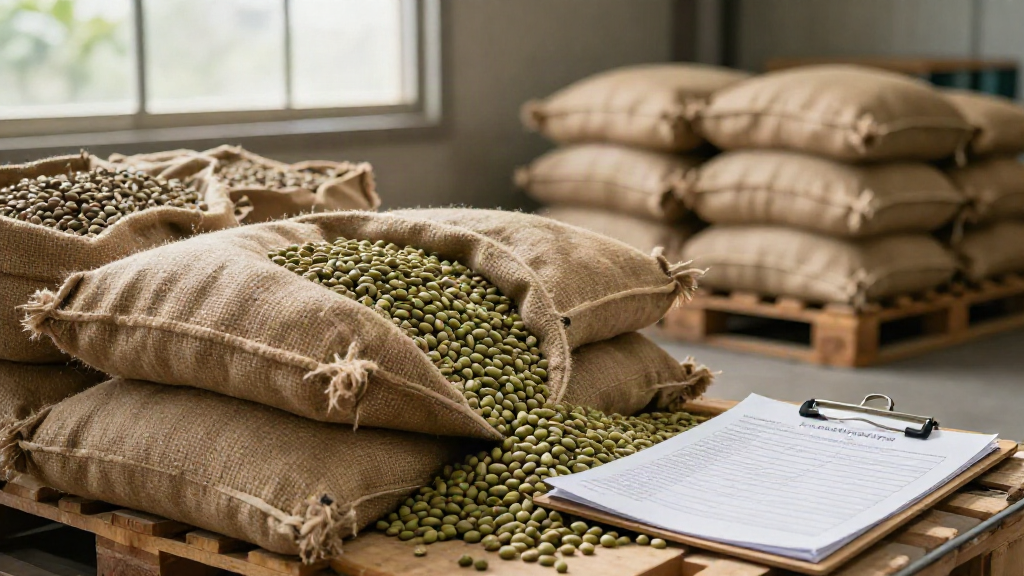
When you source green coffee, the price on an offer sheet rarely tells the whole story. You might spot a stellar lot priced at $3.20 per pound and another at $4.10 per pound, assuming the first is an obvious bargain. But if that $3.20 quote is Free On Board (FOB) at origin and the $4.10 quote is landed at your local warehouse, the real cost equation looks completely different.
Understanding green coffee FOB vs landed cost is essential for coffee roasters, green buyers, and café owners. Miscalculating what it takes to move green beans from the port of export to your roastery can quickly wipe out roasting margins and distort your pricing structure.
Here is a straightforward breakdown of what FOB pricing covers, the hidden costs that turn FOB into landed cost, and how to evaluate coffee offers on a true cost-per-pound basis.
What FOB Pricing Includes (And Where It Stops)
FOB stands for Free On Board (or Freight On Board). In international trade, FOB indicates the price of green coffee loaded onto a shipping vessel at the designated port of origin.
When an exporter or producer quotes an FOB price, that figure covers:
- The raw parchment coffee purchase and processing.
- Dry milling, sorting, and grading.
- Export packaging (standard burlap bags, GrainPro or Ecotact liners, or vacuum packs).
- Inland transport from the dry mill or farm to the origin export port.
- Export documentation, phytosanitary certificates, and export port handling fees.
Where FOB Responsibility Ends
The moment the coffee passes over the ship's rail at the origin port, the seller's financial responsibility ends. Everything that happens next - ocean transit, shipping delays, port tariffs, container demurrage, customs clearance, and inland trucking - becomes the buyer's financial and logistical responsibility.
If you buy coffee strictly on FOB terms, you are taking on the freight risk and logistics coordination yourself, or partnering with an importer who handles those logistics for an added margin.
What Is Landed Cost?
Landed cost represents the total, all-inclusive expense of getting green coffee delivered to your roastery door or designated storage warehouse. It reflects what you actually pay per pound before you charge your roaster.
To calculate landed cost accurately, buyers must account for several distinct layers on top of the base FOB price:
- Ocean Freight and Fuel Surcharges: The cost of container space, bunker adjustment factors (BAF), and currency adjustment factors. Freight rates fluctuate based on global shipping lane demand and container availability.
- Marine Cargo Insurance: Marine insurance protects your investment against container damage, water ingress, total loss at sea, and theft during transit.
- Customs Brokerage, Duties, and Taxes: Fees paid to licensed customs brokers for filing entry documentation, FDA prior notice, USDA agricultural inspections, and import harbor maintenance fees.
- Destination Port Handling and Drayage: Terminal handling charges (THC), container chassis fees, and drayage trucking to move the shipping container from the marine terminal to a regional warehouse.
- Warehousing and Palletization: De-vanning (unloading containers), palletizing, shrink-wrapping, and inbound handling fees charged by green coffee consolidation warehouses (such as facilities in New Jersey, Oakland, or Jacksonville).
- Financing and Carrying Costs: Interest expenses, letters of credit, and holding costs while coffee sits in transit or warehouse storage for weeks or months.
- Outbound Freight to Your Door: Less-Than-Truckload (LTL) or dedicated freight shipping to move individual pallets from the central green warehouse to your roasting facility.
When you add these layers together, a lot that cost $3.20/lb FOB can easily reach $4.20 to $4.50/lb landed by the time it reaches your facility.
FOB vs. Landed Cost: A Side-by-Side Comparison
To see how these numbers play out in real sourcing decisions, look at how individual line items accumulate between FOB and landed pricing:
| Cost Component | Included in FOB? | Included in Landed Cost? | Who Manages the Expense? |
|---|---|---|---|
| Green Coffee and Origin Processing | Yes | Yes | Exporter / Producer |
| Origin Export Taxes and Documentation | Yes | Yes | Exporter |
| Loading onto Ocean Vessel | Yes | Yes | Exporter |
| International Ocean Freight | No | Yes | Buyer or Importer |
| Marine Transit Insurance | No | Yes | Buyer or Importer |
| Import Customs, FDA, and Duties | No | Yes | Buyer or Importer |
| Port Drayage and Terminal Fees | No | Yes | Buyer or Importer |
| Central Warehouse Storage and Inbound Fees | No | Yes | Buyer or Importer |
| LTL Shipping to Roastery Door | No | Yes | Roaster |
How to Compare Green Coffee Offers on a True Cost-Per-Pound Basis
When roasters browse different suppliers and spot listings, price terms are often mixed. One supplier quotes spot warehouse pricing, another lists FOB origin pricing, and another quotes delivered pricing (DDP).
To make accurate purchasing decisions, follow these practical steps:
1. Standardize Every Offer to Landed or Spot Terms
Never compare an FOB price directly against an importer spot price. If you are reviewing an FOB offer of $3.50/lb, add your estimated freight, insurance, clearance, and domestic transport multiplier (often $0.80 to $1.20 per pound for small-to-medium volumes) before comparing it to a spot lot listed at $4.30/lb.
2. Factor in Volume Thresholds
Buying FOB generally requires purchasing full container loads (FCL, roughly 250 to 300 bags) or participating in shared container logistics (LCL). If your roastery only needs 10 to 20 bags of a micro-lot, buying on spot or landed terms from an importer or marketplace saves substantial administrative overhead and prevents capital from being tied up in massive inventory.
3. Account for Payment Terms and Cash Flow
FOB purchases often require upfront deposits or payment against shipping documents before the coffee even lands. Spot and landed purchases typically offer standard credit terms (such as Net 30 or Net 60), allowing you to roast, package, and sell coffee to retail customers before paying the full invoice.
4. Use Connected Platforms to Streamline Sourcing
Wasting hours calling brokers, waiting for updated offer sheets, and manually recalculating freight estimates slows down your entire production schedule. With Hightower Marketplace, green coffee buyers can search live inventory, compare offers with transparent pricing terms, post sourcing requests, and connect directly with verified suppliers - all from a single dashboard.
Sourcing Smarter with Real Cost Clarity
Navigating green coffee procurement requires total transparency. By understanding the distinction between FOB origin pricing and true landed costs, your team can protect roasting margins, negotiate better terms, and forecast annual bean budgets with confidence.
Whether you are contracting containers at origin or picking up pallet spot positions, always run the full landed calculation before you commit.